Here's Why I Speak to My Daughter in Spanish, Even If It's Not Perfect
Spanish was my first language. Then I lost most of it.
First it was just lack of practice. Then it became something heavier: shame for being Latina, and a quiet, constant push to assimilate into a mostly white high school where I didn't want to stand out.
By college, the shame had flipped inside out. Now I felt like I wasn't Latina enough, because I couldn't speak the language well anymore. In my twenties, living and working in New York City, a place that wears its diversity is visible and celebrated , that feeling followed me into rooms full of Latino colleagues. They'd speak to me in Spanish, easy and unthinking, and I'd fumble my way back in English or in Spanish that felt clumsy in my mouth.
So I decided to relearn it. Music, podcasts, books, more phone calls with my grandmother. Slowly, the fluency came back, and something else came back with it. I realized I'd spent years walking around pretending I didn't know how to jajaja, that I didn’t know how to move my hips to Joe Arroyo, or sing my heart out to bidi bidi bom bom. Getting it back didn't just mean I could speak the language again. It meant I stopped hiding a part of myself I'd been suppressing for over a decade.
Spanish is my family's herencia.
Sometimes, when I’m having conversations in Spanish, other Spanish speakers will ask where I’m from because it’s clear my words and accents are mixed, and they can’t quite place me. Am I Colombiana, Mexicana, Nuyorican, gringa, pocha?
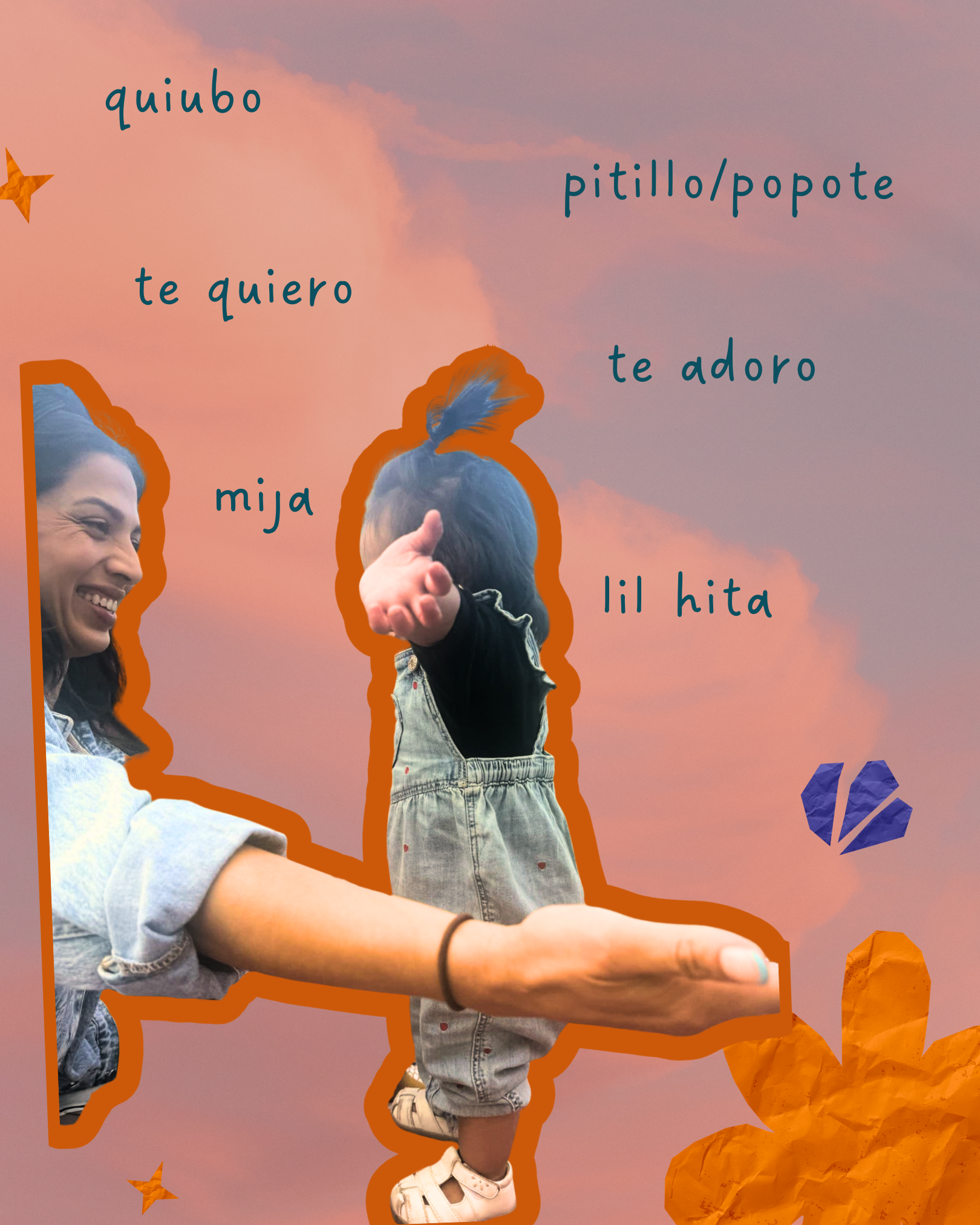
I then have to explain. I’m Colombian and Mexican. And the words, my accent, they're markers of where my people are from: quiubo, pitillo, arepas, frijoles. And markers of where I've lived and who I've loved since: chancla, piragua, que lo que.
My Spanish still isn't perfect. I mess up grammar. I get tongue-tied. Last month, as we went to the park for our usual post-dinner walk, we looked up and noticed the dragonflies and pointed them out to my daughter and in that moment realized that I had no idea how to say dragonfly in Spanish (it's libélula - thanks Google translate!).
But imperfect Spanish is still my daughter's inheritance, and I'm not going to let my own insecurity get in the way of giving it to her.
I don't want her carrying what I carried. I want her to know that her Spanish does not have to be perfect to be Latina. She is enough.
As I pass this gift down, I also recognize that teaching her Spanish isn't just about vocabulary. In a country that keeps telling us to either assimilate into whiteness or go back to where we came from, it's our own quiet form of resistance.
She belongs to this land, as do her ancestors. From South America, Colombia, down to central Mexico on mami's side. North to New Mexico and Colorado on daddy's side. She’s learning mija and hita. Pitillo and popote. Green chiles and arepas.
And, maybe one day she'll be speaking Spanish, mixing her words and her accents without apology, and someone will ask her, "Where are you even from?"
And she'll just say, "de aqui."